


MEET THE MAKER - Daum, a true master of fine decorative art glass
Daum Nancy rose to prominence during the Art Nouveau period, and captured the imagination of collectors all over the world.
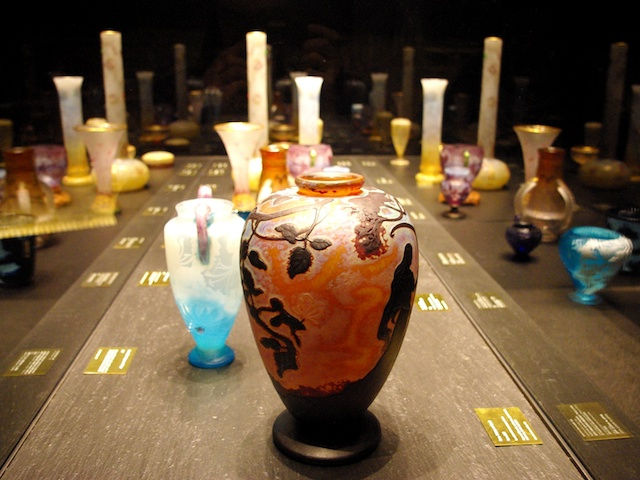
In order to understand the collector’s interest in Daum Nancy objects, one must realize that this company has shaped itself over the time to become a producer of glass art objects and not simple glassworks. It pioneered and revolutionized old techniques by working with colour powders, acids, enamel and fluorine hydrogen. From the early 1900s emphasis was placed upon ornamental motifs in naturalistic forms, just as the aesthetics of the Art Nouveau era demanded.
Let us now take a quick look at the interesting events that shaped the company.The German-French War of 1870-71 had just ended, and there occurred a shift in both the countries’ territories. The borders changed, and the Daum family found themselves suddenly in German territory. Soon after they moved to Nancy which had by then become a thriving business centre where many rich people had relocated post the war.
Jean Daum was a notary from Bitche who had lent some money to the proprietors of a glass factory in Nancy, the capital town of the French region of Lorraine. The glassworks was then named ‘Verrerie Sainte Catherine’. In 1878, Daum took over the factory when its erstwhile owners were unable to pay off their debt and renamed it ‘Verrerie de Nancy’. In this time of grave financial crisis, Daum decided to involve all his family members in the business in order to make a bit of money. This decision led to some very strict measures: his sons were married off to the daughters of rich businessmen and their dowries went straight to the glass factory. He disallowed his daughters, Jeanne, Louise and Fanny, from marrying because he did not want to spend any money on their dowry. The factory initially produced glassware such as drinking glasses and pitchers and then ventured into artistic glass manufacturing in 1891.
After Jean Daum’s death in 1885, his son Auguste Daum took over the control of the company in the year 1890. The Daum brothers exhibited their ‘Handsome Tavern Glass’ at the Paris International Exhibition in 1889. This event was of utmost significance because it marked the birth of the French Art Nouveau movement. The success of Emile Galle (another highly appreciated French glass maker operating around the same time) had egged them on in this field. It should be considered that the Daums were a family with shrewd business acumen but they were not artists; hence they hired the best artists in that time to work for them. Names like Henri Berge, Almaric Walter, Charles Schneider (see our blog 'Schneider art glass') and Jacques Gruber worked for Daum, with the only catch being that they were not allowed to sign their own names. Instead, the vases were signed Daum Nancy and bore the Lorraine cross.
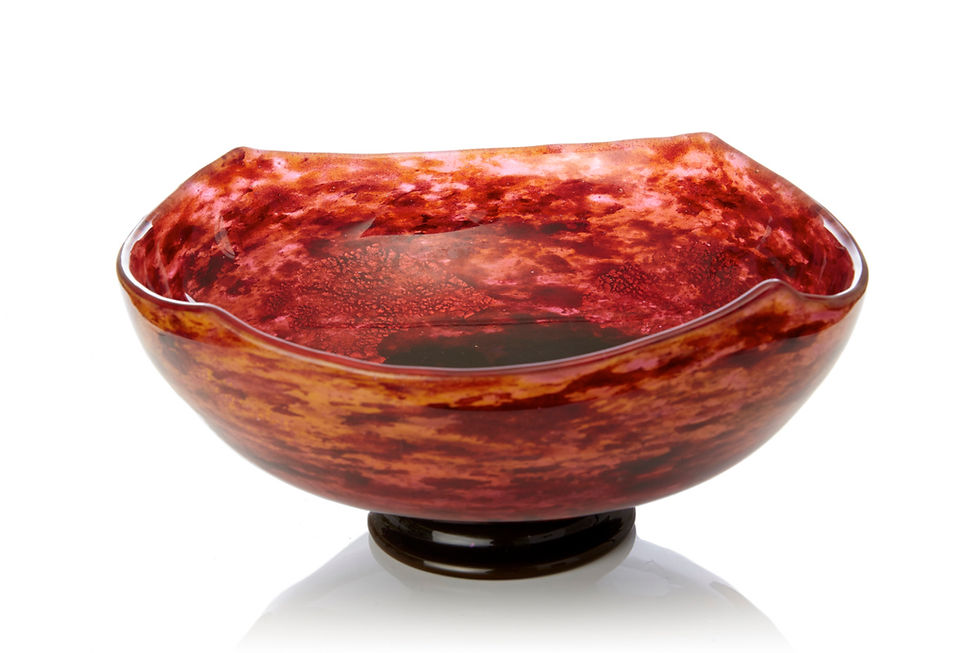
Daum received his first ‘Grand Prix’ in 1900 because by then the factory had established its name as a producer of high quality glass. By 1903, Daum had started making vitrified vases. These vases are singularly responsible for the kind of fame the company acquired in the early 1900s. In 1906 Daum began the manufacture of pâte-de-verre, a glass-making technique first used over five thousand years ago in the early world. Pâte de verre fell out of use for several thousand years and was forgotten altogether. It was not until the late nineteenth century that this glass making technique was rediscovered and used by the sculptor Henri Cross for the benefit of Daum. Pâte de verre consists of a mixture of coloured glass, ground into a fine powder, and a fusing agent. The paste is then pressed into hollow moulds, mixed with several colours and fired. The resultant glass has a mottled appearance.
The Daum brothers created these works of art at an outstanding rate, keeping up with public expectationsWhen Emile Galle died in 1904, the Daum brothers became the leaders in the field of decorative glass and their dominance lasted for one productive, golden decade.In 1914, the factory was shut down and converted into a hospital, and was reopened in 1918 under the leadership of Antonin Daum. It was halted for a second time with the advent of the World War II. The company switched then from producing decorative glass to medical glass during those years.
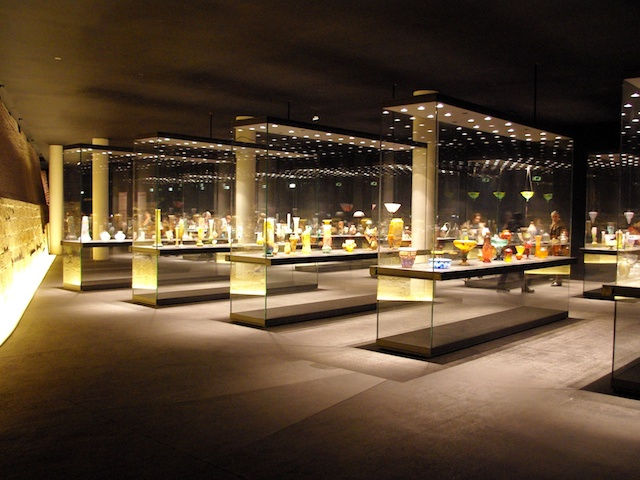
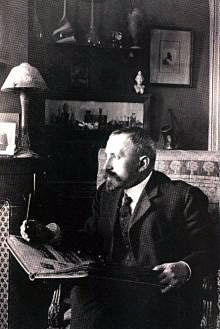



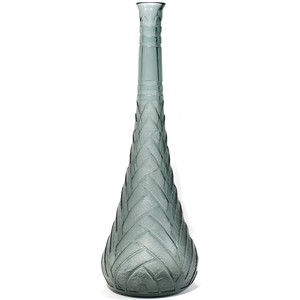

Currently the Daum company is still producing lots of stylish designs for the luxury market. It's specialized in art objects, mostly made from cast glass and lead crystal. There is also an absolutely stunning museum dedicated to their glass works in Nancy, France (as depicted above) and which we highly recommend to visit if in the area.
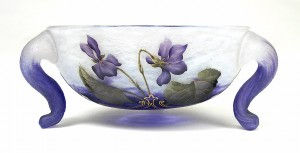
Last but not least, at Patine we are proud to have a few pieces of this master art glass maker. Please do contact us if you would like to know more. Herein bellow one of the pieces selected from our own personal inventory.


Comments